Key Functions
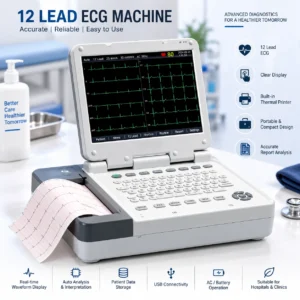
– Records 12 Leads Simultaneously: Gives a complete picture of the heart in ∼10 seconds
– Detects Abnormal Rhythms: Shows irregular heartbeats, fast/slow heart rate
– Identifies Heart Attack Location: Different leads show which part of heart is affected
– Prints Reports: Generates paper or PDF reports for patient records
– Stores Data: Modern ones save and send ECGs to EMR systems
Key Functions
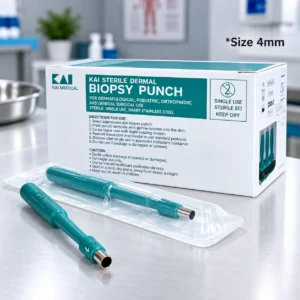
– Precision Punching: Cuts clean, uniform discs from DBS cards without contamination
– Multiple Tip Sizes: Usually comes with 3mm, 6mm punch tips depending on test protocol
– Easy Cleaning: Designed to prevent cross-contamination between samples
– Durable: Stainless steel construction for lab use
Typical Contents:
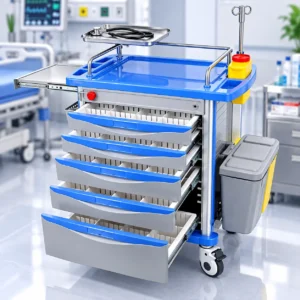
Emergency drugs, IV fluids, airway kit, suction, BP apparatus, glucometer, emergency box, waste bin, and power point for defibrillator/monitors.
Key Features:
Stainless steel body, multiple drawers with dividers, lockable, IV pole, oxygen cylinder holder, 5″ castor wheels with brakes.
In short:
An emergency trolley is used to store, organize, and quickly deliver all life-saving equipment and drugs to a patient during a medical emergency.
In short:
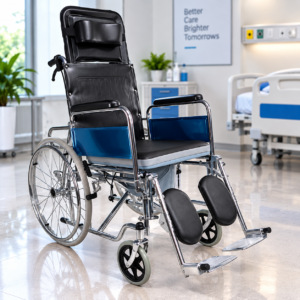
An executive/recycling commode wheelchair is used for mobility + toileting in one – safe, hygienic, and convenient for patients with limited movement.
Key Features:
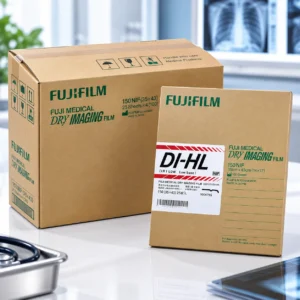
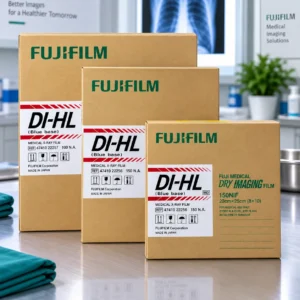
Dry processing = no darkroom, no chemicals. High contrast, sharp detail, anti-scratch coating, and consistent results.
Common Types:
Blue base film and clear base film. Sizes: 8×10″, 10×12″, 11×14″, 14×17″.
In short:
Dry imaging films are used to print and view diagnostic medical images clearly and hygienically in hospitals, radiology centers, and clinics.
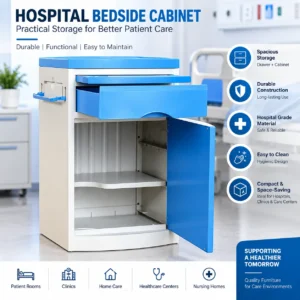
A hospital bedside locker is the small cabinet kept next to a patient’s bed.
Main Uses
1. Patient Storage
Stores patient’s personal items like phone, clothes, toiletries, and books.
2. Medical Storage
Keeps medications, medical files, water, and small treatment items close to the patient.
3. Convenience During Meals
The top surface is used as a tray for eating or placing medical equipment.
4. Organization
Drawers and cupboards help keep the ward tidy and items easy to find.
5. Hygiene
Made with wipeable surfaces like stainless steel or ABS to allow easy cleaning and disinfection.
6. Mobility
Most have wheels with locks so they can be moved and kept stable by the bedside.
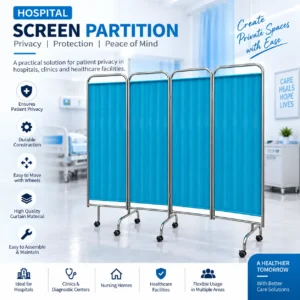
A hospital ward screen is the folding screen/curtain on wheels you see around beds in hospitals.
Main Uses
1. Patient Privacy
Creates a private space for examination, changing clothes, breastfeeding, or personal care.
2. Infection Control
Separates patients with infectious diseases to reduce cross-contamination.
3. Space Division
Divides a big ward into smaller sections for different treatments or procedures.
4. Emergency / Procedure Area
Used to create a temporary private area for wound dressing, catheterization, or minor procedures.
5. Reducing Distractions
Shields patients from seeing other patients’ treatments, which helps with comfort and calm.
6. Mobility
Has wheels so it can be moved easily and set up anywhere in the ward.