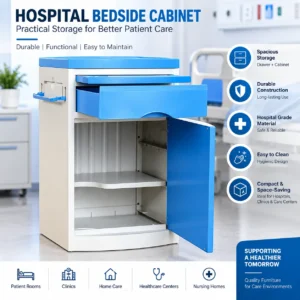
A hospital bedside locker is the small cabinet kept next to a patient’s bed.
Main Uses
1. Patient Storage
Stores patient’s personal items like phone, clothes, toiletries, and books.
2. Medical Storage
Keeps medications, medical files, water, and small treatment items close to the patient.
3. Convenience During Meals
The top surface is used as a tray for eating or placing medical equipment.
4. Organization
Drawers and cupboards help keep the ward tidy and items easy to find.
5. Hygiene
Made with wipeable surfaces like stainless steel or ABS to allow easy cleaning and disinfection.
6. Mobility
Most have wheels with locks so they can be moved and kept stable by the bedside.
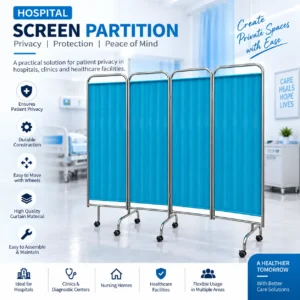
A hospital ward screen is the folding screen/curtain on wheels you see around beds in hospitals.
Main Uses
1. Patient Privacy
Creates a private space for examination, changing clothes, breastfeeding, or personal care.
2. Infection Control
Separates patients with infectious diseases to reduce cross-contamination.
3. Space Division
Divides a big ward into smaller sections for different treatments or procedures.
4. Emergency / Procedure Area
Used to create a temporary private area for wound dressing, catheterization, or minor procedures.
5. Reducing Distractions
Shields patients from seeing other patients’ treatments, which helps with comfort and calm.
6. Mobility
Has wheels so it can be moved easily and set up anywhere in the ward.
A medical adjustable stool is a small wheeled chair used by doctors, nurses, dentists, and lab staff in hospitals and clinics.
Main Functions
1. Height Adjustment
Can be raised or lowered with a gas lift lever.
Use: To match the height of examination tables, dentist chairs, or lab benches for proper posture.
2. Mobility & Easy Access
Has 4-5 caster wheels.
Use: To move quickly around the patient, equipment, or workstation without standing up.
3. Ergonomic Support
Designed with a padded seat and sometimes backrest/footring.
Use: Reduces back and leg fatigue for staff during long procedures.
4. Space Saving in Tight Areas
Small, compact design.
Use: Fits under tables and in operation theatres, labs, and treatment rooms.
5. Hygiene & Easy Cleaning
Made with PU leather or stainless steel.
Use: Easy to wipe and disinfect between patients.
6. Multi-Department Use
Use: Used in OPD, dental, lab, operation theatre, physiotherapy, and doctor’s consultation rooms.
Key Features:
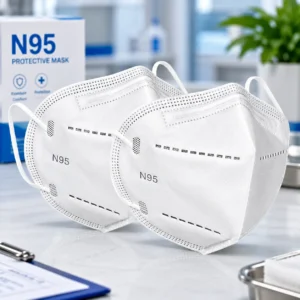
Tight facial fit + electrostatic filter. Must be fit-tested to work properly. Single-use and disposable.
In short:
An N95 face mask is used for airborne infection protection for medical staff and patients during high-risk procedures and contagious disease care.
Key Functions
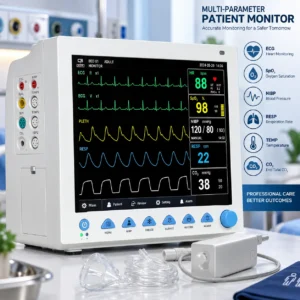
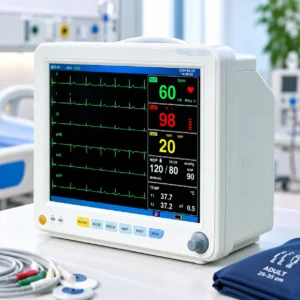
– ECG / Heart Rate: Shows heart rhythm and detects arrhythmias
– Blood Pressure: Non-invasive NIBP or invasive IBP monitoring
– Oxygen Saturation SpO2: Measures how much oxygen is in the blood
– Respiratory Rate: Tracks breathing rate
– Temperature: Body temp monitoring
– Other: Can include EtCO2, Invasive pressures, and arrhythmia alarms
– Alarms: Beeps/alerts doctors and nurses if vitals go outside safe range
– Data Display & Recording: Shows waveforms and stores patient data for records
Advanced Multi Parameter Patient Monitor designed for continuous monitoring of essential vital signs including ECG, SpO₂, NIBP, respiration rate, pulse rate and temperature. Suitable for hospitals, ICUs, emergency departments, clinics and other healthcare environments.
Key Uses
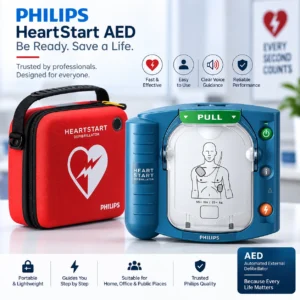
– Emergency response for sudden cardiac arrest in public places: airports, schools, gyms, offices
– First aid before ambulance arrives – every minute counts
– Used by anyone – trained or untrained, because it won’t deliver a shock unless it’s needed
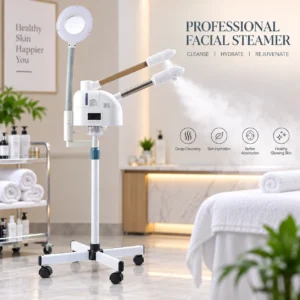
Professional Facial Steamer is designed for salons, beauty clinics, spas, and skincare professionals. It produces a gentle stream of warm steam that helps prepare the skin for cleansing and facial treatments. Its professional design and easy operation make it suitable for regular skincare procedures.
Key Features
Professional-grade facial steaming equipment
Produces warm steam for facial treatments
Helps prepare skin before cleansing and exfoliation
Suitable for salons, spas, beauty parlours and skincare clinics
Easy-to-use operation
Compact and space-efficient design
Suitable for regular professional use
Durable construction for everyday salon applications
Adjustable steam direction for convenient treatment
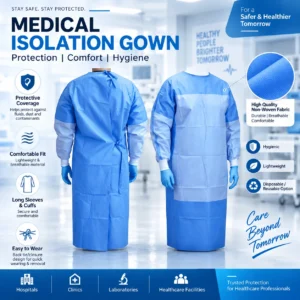
A reinforced surgical gown is used for maximum barrier protection during surgery – protecting both patient and staff from fluids, blood, and infection.
Key Features:
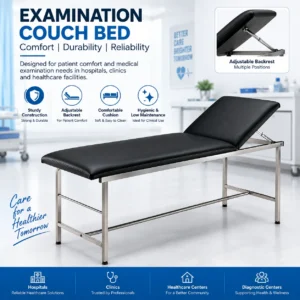
Stainless steel top + frame, padded or plain top options, adjustable height in some models, easy to sanitize, load capacity 150-200kg.
In short:
A stainless steel examination couch is used for patient examination, minor procedures, and dressing in clinics, hospitals, and diagnostic centers because it’s durable and hygienic.
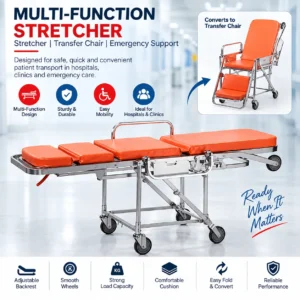
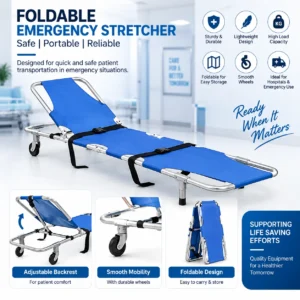
A stretcher is used to move and support patients safely when they can’t walk.
Main Uses
1. Transport patients – From accident scene to ambulance, or between hospital departments
2. Emergency care – For trauma, accident, or critical patients who need to lie flat
3. Immobilize injuries – Keeps patients stable to prevent further injury during movement
4. Surgery & recovery – Moving patients to/from operating theatre and recovery rooms
5. Easy handling – Has wheels, side rails, and straps so staff can move patients with less strain